Why Your Manufacturing Company Business Needs a Mobile App
Common challenges that a professional mobile app solves
Blind Spots Between Shifts
Shift handovers rely on paper logs and verbal updates, so critical machine issues fall through the cracks overnight.
Slow Defect Response
Quality problems are discovered hours after they start because inspectors must walk the floor and manually record findings.
No Real-Time Production Visibility
Managers cannot see live OEE, cycle times, or downtime reasons without physically walking to each workstation.
Paper-Based Work Orders
Operators juggle clipboards and printed job sheets that get lost, damaged, or outdated before the shift ends.
Features Built for Your Needs
Every feature is designed to help your business grow and deliver an exceptional user experience.
Live Machine Dashboards
Real-time OEE, cycle count, and downtime alerts streamed directly to operator and manager phones
QC Photo Capture
Snap defect photos on the line, annotate them, and attach to the part or batch record instantly
Digital Work Orders
Receive, start, pause, and close work orders from the shop floor with barcode scanning
Push Alert Escalations
Tiered push notifications for machine faults, quality holds, and safety incidents sent to the right people
Offline Data Entry
Log production counts and inspection results in areas with poor connectivity; data syncs when signal returns
Barcode & QR Scanning
Scan part numbers, bin locations, and serial codes using the phone camera for error-free data entry
Manufacturing Company App Development That Fits How You Actually Work
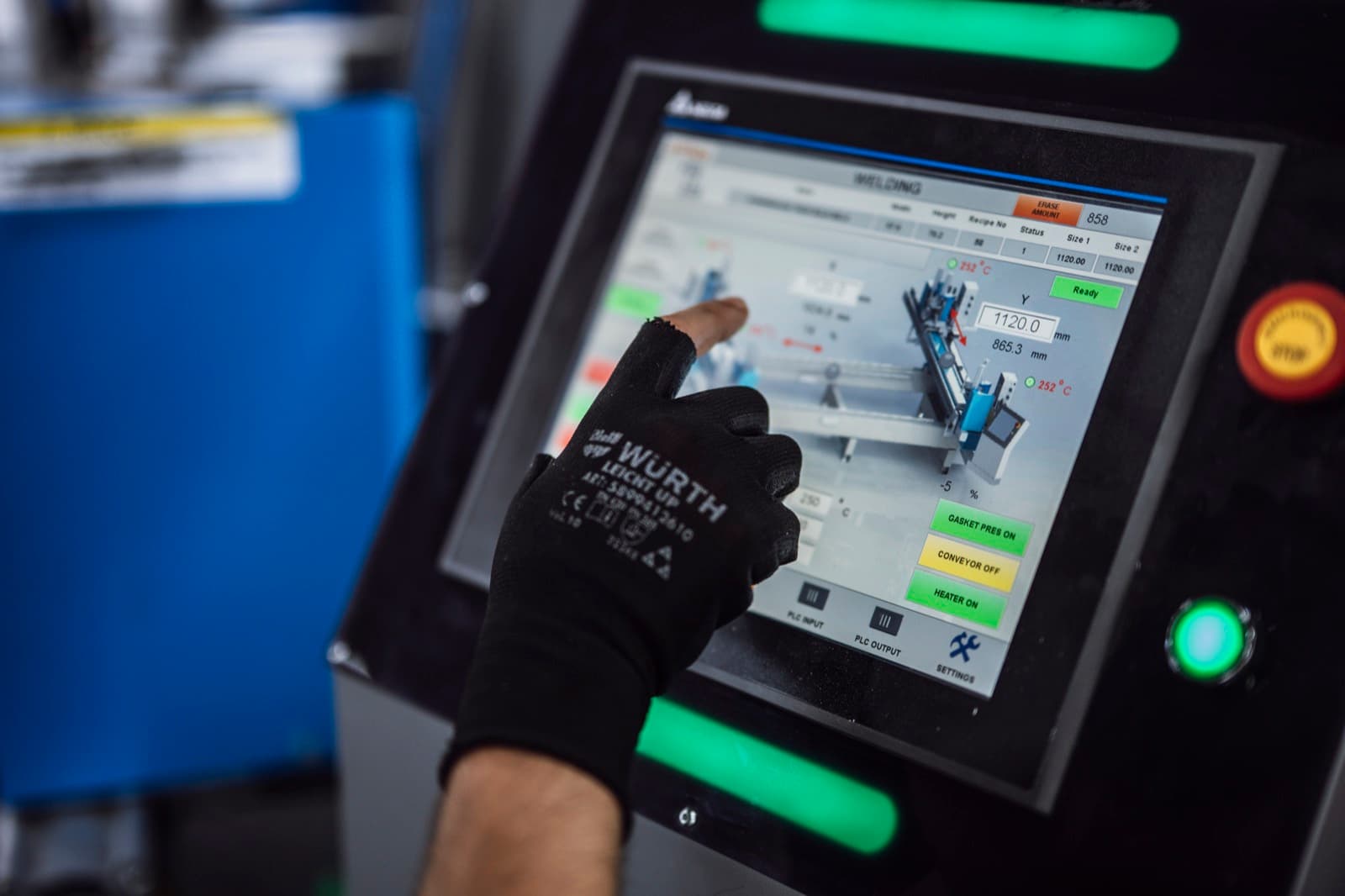
Your shop floor still runs on clipboards and a shared Excel file that's already wrong by 10am. Operators write output on paper, a supervisor keys it in that night, and by the time it hits your ERP the shift is over. We build production management apps that put a rugged tablet at every line so counts, scrap, and machine states are captured the moment they happen. No re-keying, no guessing what actually ran.
A production app is only useful if it reflects the real order of work: job travelers, work orders, multi-level BOMs, and routing steps that match how parts actually move station to station. We model your operations, not a generic template. Operators scan a work order, see the exact BOM and setup sheet for that run, log good and reject counts against it, and flag a downtime reason with two taps. Every event is timestamped and tied to a machine, part, and operator.
The app is the easy 30 percent. The hard 70 percent is making it agree with SAP, Epicor, NetSuite, or Tally so production, inventory, and costing stay in sync both ways. We've done that plumbing, and we'll tell you honestly where a clean API exists and where we're building a middleware bridge around a legacy ERP. That's the difference between a pilot that dies on one line and a system that runs the whole plant.
What Manufacturing Company App Development Costs
Honest 2026 ranges by scope and timeline. Your quote depends on features, integrations, and complexity.
Pilot / single-line MVP
$28,000 - $55,000
3-5 months
One production line or cell. Work-order lookup, good/reject count capture, downtime reasons with a fixed code list, live line dashboard, and a one-way nightly export to your ERP. Runs on Android rugged tablets. Proves the shop-floor data is trustworthy before you scale it.
Plant rollout
$60,000 - $130,000
6-9 months
Multiple lines and shifts, full OEE (availability, performance, quality), multi-level BOM and backflush inventory, mobile QC with photo capture and non-conformance workflow, role-based access for operators/supervisors/quality, and two-way real-time ERP sync (SAP/Epicor/NetSuite).
Connected factory
$140,000 - $300,000+
9-15 months
Everything in rollout plus IoT sensor and PLC/OPC-UA machine data (auto-counts, no operator entry), predictive-maintenance alerts, lot/batch traceability for ISO 9001 / FDA, multi-plant reporting, and a customer/dealer order-status portal. Phased so each stage pays for itself.
Custom Build vs Off-the-Shelf
When a packaged tool is the smart choice — and when a custom build pays off.
Integrations We Build for Manufacturing Company
We connect your new build to the tools your team already runs.
How We Work
A proven four-step process that delivers results on time and on budget.
Discovery
We learn about your business goals, target audience, and requirements to craft a tailored strategy.
Design
Our designers create stunning mockups and prototypes that align with your brand identity.
Development
Our engineers build your solution with clean, scalable code and the latest technologies.
Launch
We deploy, test thoroughly, and provide ongoing support to ensure a smooth launch.
Frequently Asked Questions
Common questions about our manufacturing company solutions.
Need a website instead of an app?
Manufacturing Company Website DevelopmentLearn More About Manufacturing Company Apps
Why Manufacturers Need a Website in 2026 (and How B2B Buyers Actually Search)
8 min read
Top Features for a Manufacturing Mobile App
8 min read
Manufacturing Digital Transformation Guide
8 min read
How to Choose the Right Manufacturing Website Developer
8 min read